Originally published on Substack: https://christopherswilson.substack.com/p/why-politics-feels-more-personal
Why Voters Lock In Emotionally Before Polling Catches Up
Dec 23, 2025
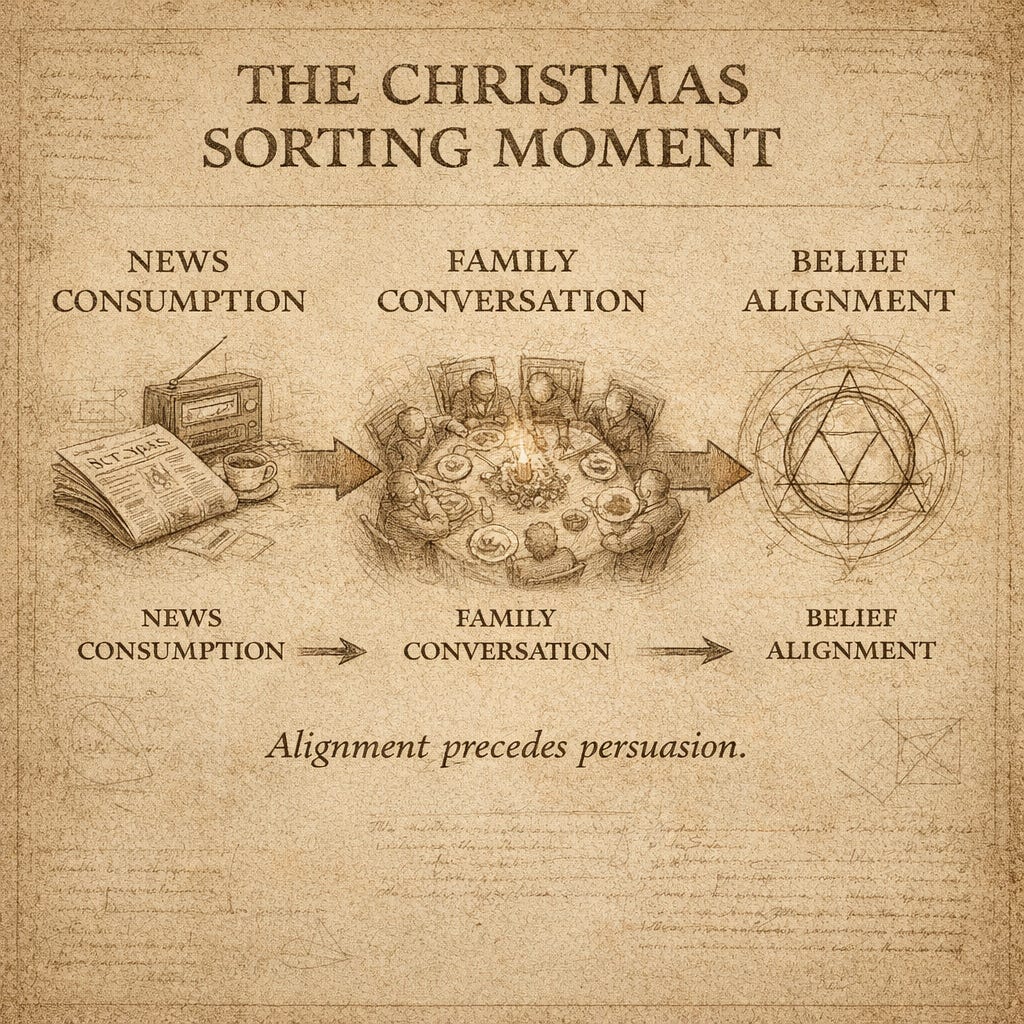
Every election cycle has a moment when voters stop reacting and start sorting.
It’s not after a debate.
It’s not after a poll.
It’s Christmas.
Campaigns treat this week as downtime. That’s a mistake. Christmas isn’t when voters persuade each other — it’s when they decide what side of the argument they’re actually on.
Why Christmas Matters Politically
Political scientists have long observed that beliefs consolidate in low-information, high-emotion settings. People don’t form opinions while consuming news — they form them while explaining themselves to people they trust.
Christmas creates exactly that environment.
In The Nature and Origins of Mass Opinion, John Zaller describes how voters stop weighing competing considerations and begin aligning them. That alignment accelerates during the holidays.
By January, many voters aren’t undecided. They’re sorted.
Karl Rove Understood This
One of Karl Rove’s most underappreciated habits was what he did after Christmas. While others waited for polling, Rove circulated long framing memos — not tactical plans, but assessments of how voters were thinking.
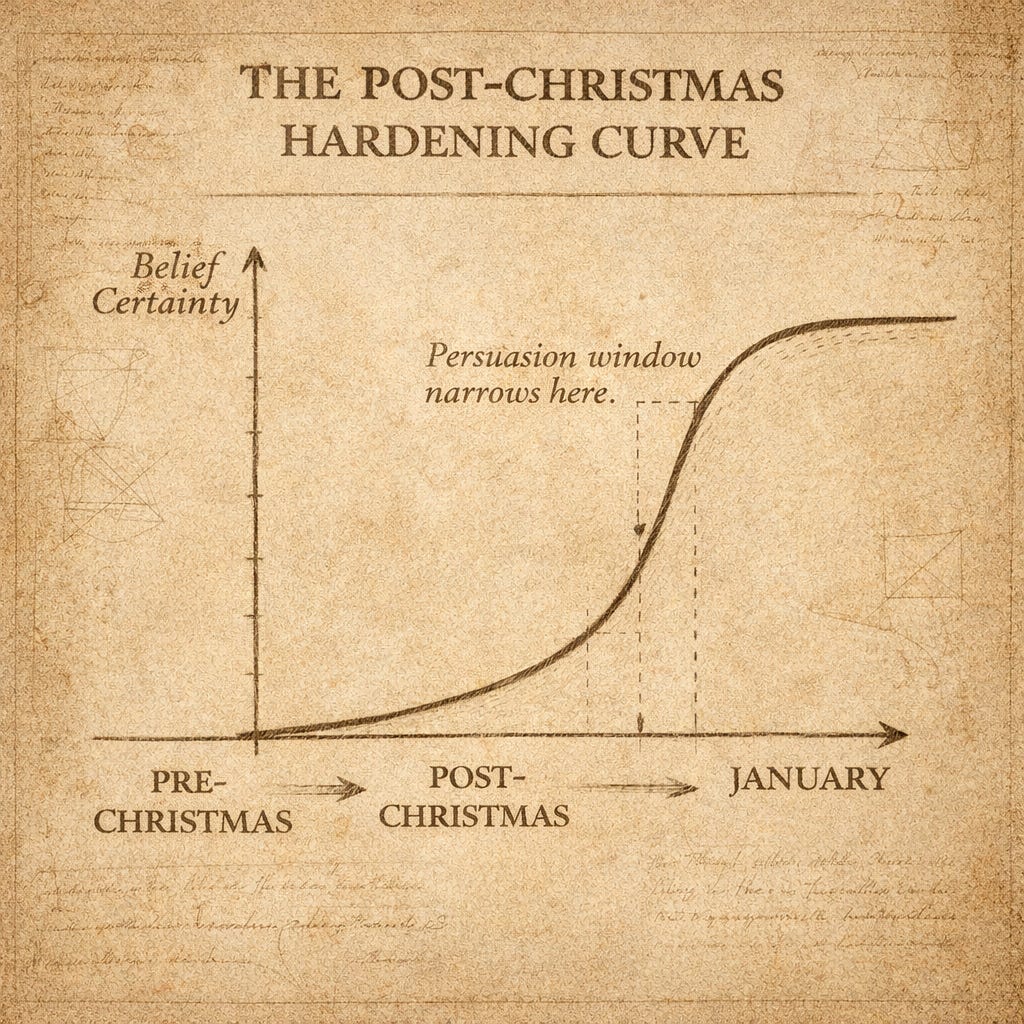
He understood something most consultants miss: Christmas doesn’t change opinions. It hardens them.
That’s why Bush campaigns often moved decisively in January while opponents were still “waiting for data.”
The data had already moved — just not in polls.
What Actually Gets Argued at the Table
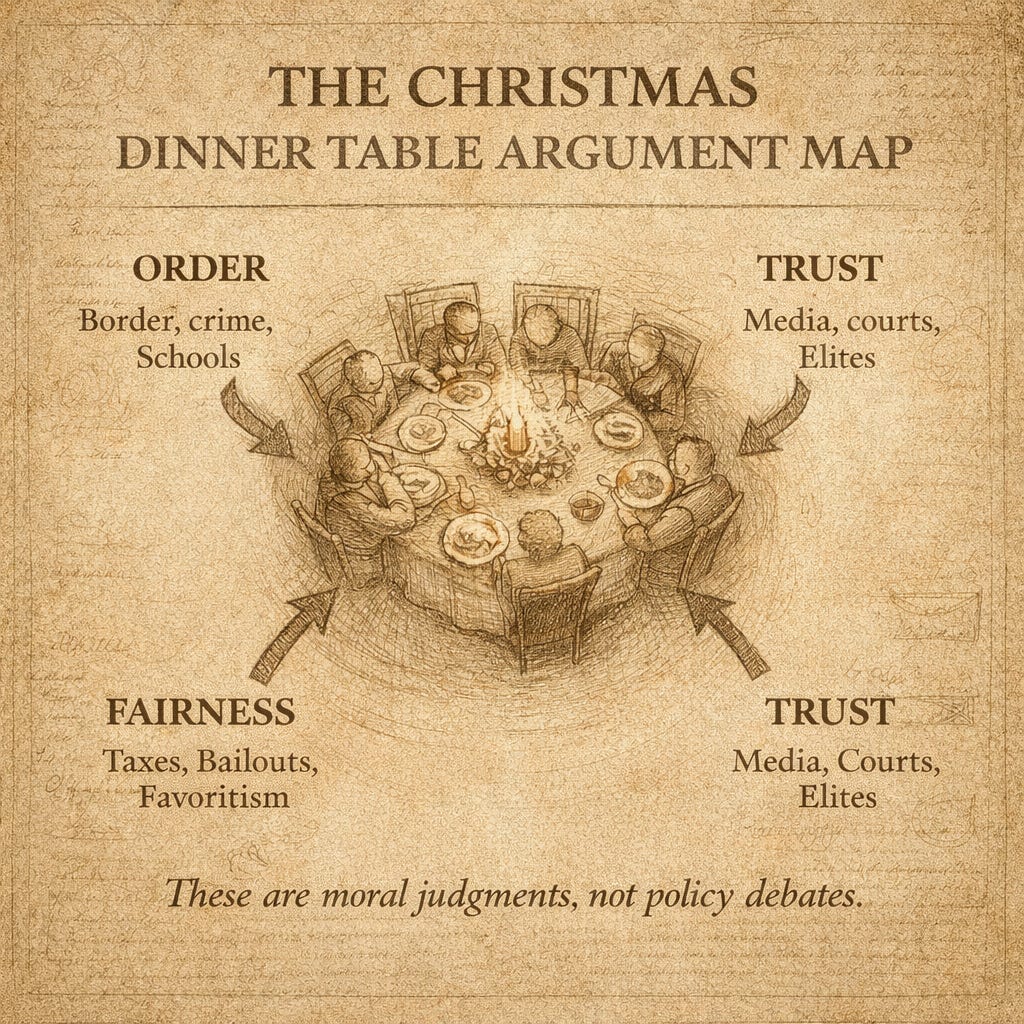
Strip away the politics and most Christmas arguments fall into three categories:
Order — “Things feel out of control.”
Border, crime, schools, institutional breakdowns.
Fairness — “The system doesn’t work evenly.”
Who pays, who gets protected, who gets punished.
Trust — “I don’t believe the people in charge.”
Media, courts, universities, bureaucracies.
These aren’t issue debates. They’re moral judgments.
Jonathan Haidt’s work shows moral intuition comes first; reasoning follows. Christmas is when that intuition becomes explicit.
Why This Matters for GOP Primaries
Republican primary voters aren’t just ideological — they’re coherence-driven. They want rules applied evenly, authority that feels legitimate, and institutions that work.
Christmas conversations reveal whether voters believe those things are recoverable — or already lost.
In The Party Decides, Cohen et al. show elites coordinate early. What’s less discussed is that voters coordinate emotionally before elites ever see it.
Christmas is one of the few moments that coordination happens out loud.
A Reminder from Recent History
In 1992, the economy was improving, but voters didn’t feel it yet. Clinton won by aligning with voters’ emotional reality, not economic data.
In 2010 and 2014, Tea Party energy surged after the holidays — once voters finished sorting at home.
Campaigns that waited for confirmation from polls were already behind.
What to Watch Going into January
This isn’t the week to chase metrics.
It’s the week to listen.
What frustrations turn into certainty?
Which issues keep resurfacing unprompted?
By January, persuasion windows narrow. Voters are no longer drifting — they’re aligned.
The campaigns that understand how that alignment formed will look prescient by February.
The rest will say it came out of nowhere.
It never does.
 Christopher S. Wilson
Leave a comment