Originally published at: https://christopherswilson.substack.com/p/inside-the-mind-of-the-gop-electorate
The 7 Voter Types Who Decide Primaries—and the Research That Proves It
Sep 09, 2025
Many political pollsters still divide voters into ideological buckets:
- “Very conservative”
- “Somewhat conservative”
- “Moderate”
Or try to achieve strategic creativity by discussing “Trump Republicans”. Or, worst of all, drive targeting discussions with the antiquated “4 of 4” voter measurement.
But that model is outdated—and dangerously incomplete.
Today’s Republican primary electorate is not driven by ideology alone. It’s driven by identity, emotion, and narrative exposure. If your campaign only measures what voters say in polls or what they did in the last cycle/cycles, you’re missing the most critical groups—the ones who flip primaries.
What you need is a behavioral framework.
This post introduces the 7 voter types that actually decide GOP primaries, backed by political science and behavioral data. In the next post, I’ll walk through how to track, target, and message each one in real time using sentiment analysis.
Why the Old Labels No Longer Work

Political scientists like Lilliana Mason (Uncivil Agreement, 2018) and Iyengar & Westwood (Fear and Loathing Across Party Lines, 2015) have shown that modern partisanship isn’t about ideology—it’s about tribal identity and emotional reaction. And Zaller’s RAS model (1992) shows how voters absorb information only after it becomes part of the dominant narrative.
Most campaigns only use polling and historical (“4 of 4”) or predictive (“high propensity”) analytics:
- Polling = what voters say when asked
- Analytics = what voters have done in the past
But to truly understand—and move—voters in a volatile GOP primary, you also need:
- Sentiment analysis = what voters feel now and how fast they’re moving
Here are the seven voter types that matter most:
The 7 GOP Voter Types
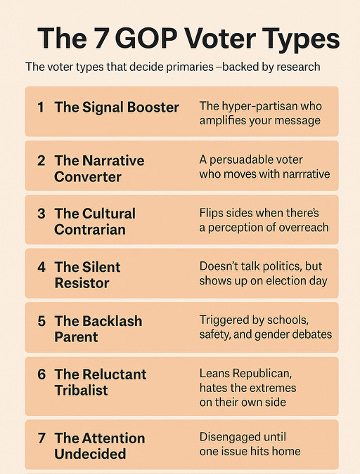
Each of these groups plays a critical role. Most campaigns only target two of them. That’s a mistake.
1. The Signal Booster
- Description: The hyper-engaged partisan. They amplify your message, attend your events, wear the merch, and share the memes.
- Behavior: Loud, loyal, highly visible—but not persuasive to anyone else.
- Academic Support: Affective polarization and partisan echo chambers, Mason (2018), Iyengar, Sood & Lelkes (2012)
- Why Campaigns Love Them: Easy to activate.
- Why They’re Dangerous: Over-influences messaging. You end up preaching to the choir instead of growing the congregation.
2. The Narrative Converter
- Description: Persuadables who shift when the story shifts. They respond to dominant emotional narratives.
- Behavior: Doesn’t move on policy. Moves when the news moves.
- Academic Support: Zaller (1992), The Nature and Origins of Mass Opinion — RAS model explains media-driven shifts.
- Why They Matter: This is where persuasion lives—but only in the right window.
- Why Polling Misses Them: They change after the poll is fielded.
3. The Cultural Contrarian
- Description: Punishes overreach. Not ideological—reactive and emotional.
- Behavior: Hates being told what to think or say. Resents elite narratives. Often flips out of protest.
- Academic Support: Mason (2018), “Identity-based backlash voting”, and Hersh (2020), Politics Is for Power
- Why They Matter: High potential for swing movement in cultural flashpoints.
- Why Sentiment Detects Them: Anger spikes, sarcasm, sudden issue engagement—months before polls catch on.
4. The Silent Resistor
- Description: Won’t talk politics, won’t take your poll—but will absolutely vote.
- Behavior: Quiet, invisible, but reliable in turnout. Often activated by resentment, shame, or defiance.
- Academic Support: Kuklinski et al. (1997), Social Desirability Bias
- Why Polling Misses Them: They either don’t answer or lie when asked questions. But behavior-based signals and sentiment proxies identify them (you might be amazed what people will say on X or Reddit).
5. The Backlash Parent
- Description: Politically dormant until schools, safety, or gender policies hit home.
- Behavior: Emotional activation → rapid mobilization → message discipline.
- Academic Support: Hersh (2020), political hobbyists vs. “activated citizens”
- Why They Matter: Show up late, change momentum fast, often missed by targeting models.
- How Sentiment Helps: When a school board decision spikes online emotion, this group shows up immediately.
6. The Reluctant Tribalist
- Description: Leans Republican but hates the extremes on their own side.
- Behavior: Withdraws from politics unless someone sounds rational, respectful, or different.
- Academic Support: Iyengar & Westwood (2015) — negative partisanship drives behavior more than policy preference.
- Why They’re Missed: Underperform in MAGA-style engagement metrics. But they’re still gettable—with the right tone.
- Why You Need Sentiment: Tone matters here. You need to measure how your message lands, not just what it says.
7. The Attention Undecided
- Description: Disengaged until one issue hits home. Then highly persuadable.
- Behavior: Low interest → sudden high reactivity. Late deciders who move fast.
- Academic Support: Barber & Pope (2019) — low-attention voters behave like consumers, not citizens.
- Why They’re Dangerous to Miss: These are often the surprise voters that win or lose races.
- Why Polling Misses Them: Screened out as “low propensity.” But sentiment analysis sees when their attention spikes.
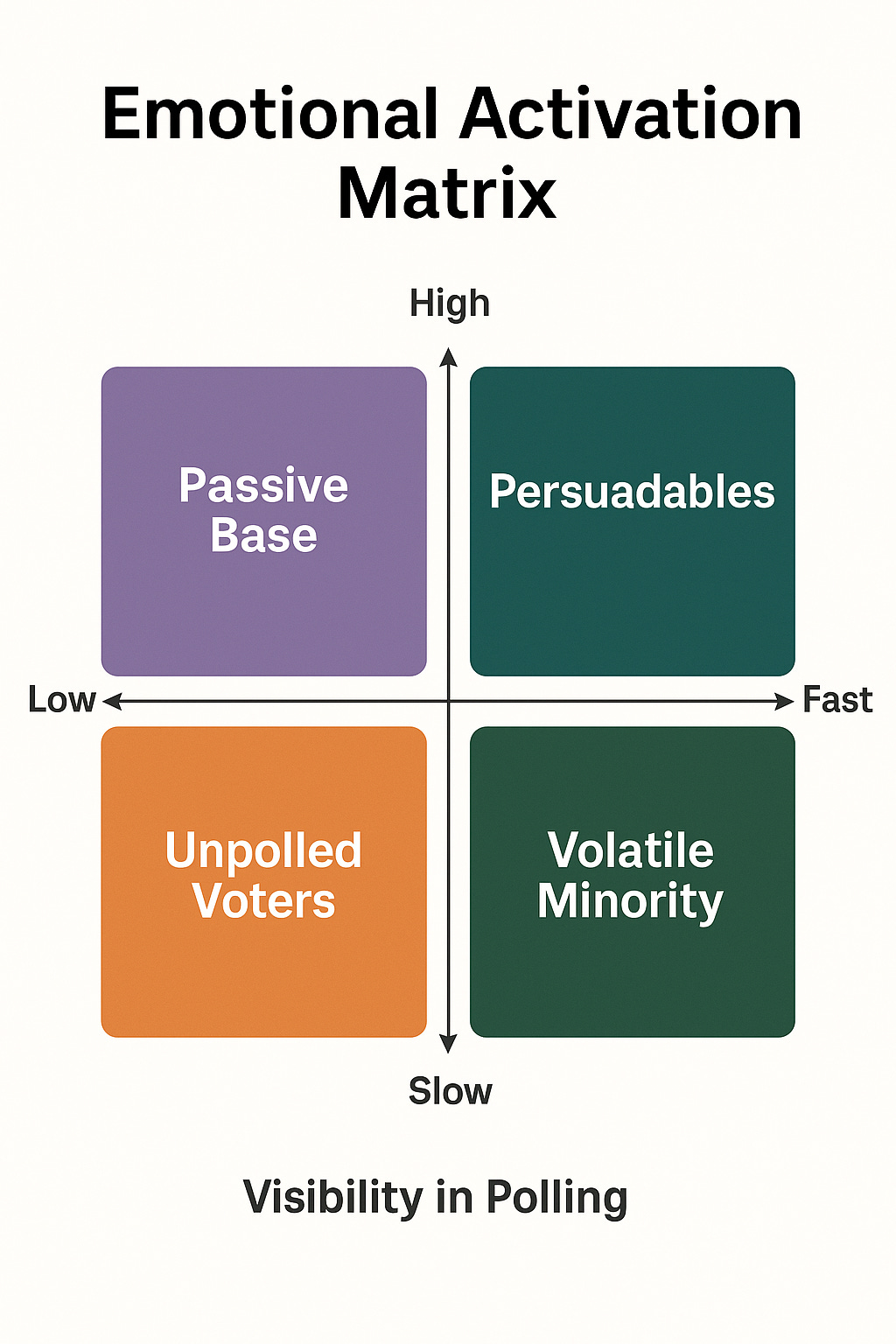
Why This Framework Matters
If you’re only measuring ideology and vote history, you’re missing the behaviors that drive real change. That’s why our “3-Lens Model” matters more than ever:
Polling: What voters say when asked
Analytics: What voters have done in the past
Sentiment Analysis: What voters feel and respond to now
Together, they show you:
- Who to watch
- When to move
- How to persuade
 Christopher S. Wilson
Leave a comment